Showing posts with label 2000. Show all posts

Monday, 2 August 2010

‘Glo’ by Delirious?

When Delirious? released Glo, I had high hopes. It was touted at the time as some sort of ‘Cutting Edge 5’, a return to the band’s routes after the moderate mainstream success of ‘King of Fools’ and ‘Mezzamorphis’. Ultimately, I remember finding the album something of a disappointment, and it’s not an album I’ve listened to much in the meantime.

I should be clear though – this is not a bad album. There are a number of very good songs on it, and nothing that’s worse than average. I think the album suffered, and still suffers, from high expectations, and a slight lack of direction. The idea of making an album more grounded in worship is hard to fault, but the albums preceding this one weren’t especially ambiguous, and the problem with ‘Glo’ is that it still isn’t written for a congregation. You couldn’t use these songs in a church, so all you really get is a slightly simpler version of what’s gone before. There’s no ‘Thank You For Saving Me’ on this record, no ‘Shout To The North’, not even a ‘Did You Feel The Mountains?’

‘God You Are My God’ is a case in point for the strengths and weaknesses of the album. It’s a confident performance with a solid production, and it has some lovely touches – the choir, and the chanting monks are both evidence of the band’s ambition, but there’s no real depth to the song, and it launches immediately into an improvised instrumental section that, for all its heart, doesn’t convey much of anything. ‘God’s Romance’ has more drive, and ‘Investigate’ more depth, though again, the extended musical outro is unnecessary. The middle of the album has some strong points. ‘My Glorious’ is the heart of the album, and a highlight track, but still a song that would sit awkwardly on the radio or in a church – the worst of both worlds, if you will. ‘Everything’ is a real standout, largely because it doesn’t try to straddle this line – it’s a song of worship, clearly, but it sounds like a mainstream hit until the end when the choir kicks in, but holding this trick back for the closing moments makes it work. ‘Hang On To You’ is a good listen, though it sounds like a closing track with six songs still to go. ‘Intimate Stranger’, in all honesty, is seven and a half minutes of tedium. ‘Awaken The Dawn’, on the other hand, is great – a classic Delirious anthem, and the only track from the album you could genuinely use in church. It would be a triumph, if not for the fact that it had been written several years before the rest of the album, and had already been released and made successful by Noel Richards. ‘Years Go By’ is Delirious by numbers, fine but unremarkable. ‘Jesus’ Blood’ is a brooding finisher, a kind of sequel to ‘Obsession’ from Cutting Edge 4.

So it really isn’t bad, but it was the first Delirious album not to represent a significant step forward, choosing instead to lurch sideways. Worse, the knock-on effect, in my opinion, had an impact on their next album, another attempt to break the mainstream market which was somewhat derailed by this. But out of context, and judged on its own merit, this was a decent listen.

Wednesday, 28 April 2010

'Funeral' by Arcade Fire

There are lots of average albums out there, and there are plenty of good ones. Every now and again, however, comes an album so special you wonder how music as a whole got by without it. ‘Funeral’ is one of those albums. There is nothing, literally nothing, I would change about this album. From start to finish, it’s utterly glorious. Shambolic, chaotic, energetic, rough around the edges but wonderful all the same.

I can remember listening to the album for the first time on my journey to work after buying it on the strength of a Jools Holland performance. As ‘Neighbourhood #1’ began, I was intrigued. By the time the tempo had noticeably started to accelerate, I was hooked. By the time ‘Neighbourhood #2’ had played out, with its shouty vocals and accordion riffs, I knew there was no way I wasn’t going to love what followed. Sure enough came ‘Neighbourhood #3’, ‘Crown Of Love’, ‘Wake Up’, and the utterly brilliant ‘Rebellion’ – track after track of goodness.

This is hardly a controversial view – Arcade Fire had nothing but praise from virtually the whole world when this album was released, and the positive reception lasted almost unscathed though the release of their follow-up as well, but no matter. There are no inherent points in thinking differently to everyone else. Sometimes, the hype is justified.

Tuesday, 13 April 2010

‘Fold Your Hands Child, You Walk Like A Peasant’ by Belle and Sebastian

By album number four, the early Belle and Sebastian formula feels a little strained. The songs on ‘Fold Your Hands’ are still good, and they’re being performed well enough, but somehow, it doesn’t quite feel enough.

So, the problem isn’t the quality of songs. Some of them – ‘I Fought In A War’, ‘The Model’, ‘The Wrong Girl’ – are excellent, but they need an extra sparkle. ‘Dear Catastrophe Waitress’, their next proper album would contain that sparkle, matching the ambition of this album to a producer who could handle it. It would have been great to know what Trevor Horn could have done with a track like the closing ‘There’s Too Much Love’ – a track which has a good song buried within it, but which sounds slightly messy all in all.

However, fans of Belle and Sebastian should find enough in this album to make it a worthwhile listen. Only ‘The Chalet Lines’ really doesn’t work. Perhaps it’s possible to place a song about rape onto a light hearted pop album without sounding horribly crass, but not on this evidence.

'Flying Low EP' by Bell Jar

Bell Jar were the highlight of my one and only trip to the Greenbelt festival. As the band that rose from the ashes of Eden Burning, I had high hopes, and I wasn’t disappointed. The band had, by that point, released one album, and this, a follow-up EP, both of which I bought there and then.

This EP, then, acts as a taster for the album they were preparing at the time. It consists of four tracks, all of which are great. ‘Cage The Bird Up’ is a low-level anthem enhanced by a simple but effective brass section. ‘It Hurts’ is a downbeat but heartfelt song which shows demonstrates the key characteristics of a Paul Northup lyric – based on faith, but ambiguous enough to feel accessible without being preachy. ‘One Needle’ is a well constructed groove-based song with a muted lead trumpet line – the song least likely to have been recorded by Eden Burning. ‘The Longer The Better’ is a fitting close – bigger, more sprawling, and with just a hint of funk towards the end.

I imagine this is pretty rare – Bell Jar never hit the comparative heights Eden Burning managed, and I’m not sure whether or not they still exist – but it’s a little gem.

Thursday, 25 March 2010

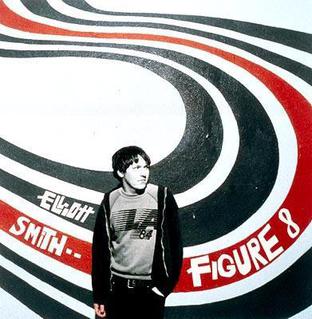
‘Figure 8’ by Elliott Smith

Elliott Smith is an artist I’ve come to with little sense of order. I don’t have all his albums, and those that I have were acquired as and when the opportunity arose. Because of this, I’d paid little attention to the development of his music before this listening project. However, ‘Either/Or’, one of his early albums, was a recent listen, and the contrast between that and ‘Figure 8’ is very apparent.

Released on a major label, and with all the budgetary implications that this brings, ‘Figure 8’ is a brilliant record. The familiar aspects of Smith’s work – the fragile solo voice, the luscious Beatles-esque harmonies, the wonderfully constructed melodies – are all present, and displayed fully, but ‘Figure 8’ has a depth to its arrangement that simply wasn’t possible on his earlier records. ‘Son Of Sam’ may start the album with a fairly conventional, if great, slice of acoustic indie, but mixed in amongst the conventional tracks (‘Wouldn’t Mama Be Proud’, ‘Stupidity Tries’, ‘Junk Bond Trader’) are the wonderfully simple (‘Somebody That I Used To Know’, ‘Everything Reminds Me Of Her’) and the more ambitious. ‘Everything Means Nothing To Me’ makes very effective use of a tumbling piano line and a layered vocal track before exploding into waves of strings at the end. ‘In The Lost And Found’ is built entirely around a honky-tonk piano line – presumably played by Smith – that is hugely more impressive than any of the keyboard parts in his early work, and a real testament to his growth and development as a musician.

You could make a case for saying that ‘Figure 8’ is less immediate, less intimate, than Smith’s earlier records, and this would be a justifiable criticism, but anything it lacks in these areas is more than compensated for by its sheer quality.

Monday, 22 February 2010

'Drawn From Memory' by Embrace

‘Drawn From Memory’ was the second album from Embrace, and it marks the point where the wheels began to fall off the band. After the hype and bluster of ‘The Good Will Out’, the band needed an excellent second album to justify themselves. This wasn’t it.

That’s not to say it’s a bad album. Bits of it are great – ‘The Love It Takes’, ‘You’re Not Alone’ and ‘Save Me’ are all very effective. Sadly, they’re all done in the first three tracks. All three are examples of Embrace’s strong point – the mid-tempo indie sub-anthem. They genuinely do this very well. The trouble is, the rest of the album swerves too far from this template in either direction. When they slow down to a ballad (‘Drawn From Memory’ and ‘Liar’s Tears’), they never achieve anything more than boring. When they turn things up and attempt genuine rock, the results are mildly embarrassing. ‘Yeah You’ is the nadir – a shouty belligerent slice of pointlessness. ‘New Adam New Eve’ is better, but only by default. The only real point of bravery on the album is ‘Hooligan’ which is both intriguing and irritating in equal measure – a brave choice for a first single, but rather too dependent on the listener loving the kazoo. Embrace managed one more album after this before being dropped. They had a resurgence due to a Coldplay act of charity, but where are they now? No-one really seems to care.

Thursday, 28 January 2010

‘Daisies Of The Galaxy’ by Eels

If emotion can be charted on a graph, there was only one direction that ‘Daisies of the Galaxy’ could go, following the ultra-bleak ‘Electro-Shock Blues’. It’s a testament to Mark Everett’s misery that this album was, and arguably still remains, the most upbeat and cheerful record in the Eels back catalogue. Some of it genuinely sounds happy – ‘Grace Kelly Blues’, ‘I Like Birds’ and ‘Tiger In My Tank’ all sound like they were sung with a smile – but much of it is either still run through with a sense of melancholy (‘Jeannie’s Diary’), or an unsettling sense of peculiarity (‘Flyswatter’, ‘The Sound of Fear’). Even amongst the relative cheeriness, Everett still manages to squeeze in track 7. So, despite being the happiest Eels album in existence, it’s an album you’re unlikely to reach for if you want cheering up.

Never-the-less, ‘Daisies of the Galaxy’ is a lovely album. Instrumentally, it’s gentler than ‘Beautiful Freak’, more accessible than ‘Electro-Shock Blues’, and much easier to listen to than ‘Souljacker’, the album that came next. Awash with acoustic instruments and piano, it would make very pleasant background music if it wasn’t for vocals which demand your attention. Even at his most commercially pleasing, Everett refuses to make any kind of music other than exactly what he wants to make, and as usual, he should be applauded for this.

Friday, 11 December 2009

‘Bowie At The Beeb’ by David Bowie

Thirty-seven tracks of Bowie goodness, taken from Bowie’s session recordings between 1968 and 1972. Between these years, Bowie underwent an number of musical transformations, and this collection charts this journey brilliantly. The first section of the first disc contains songs from the outskirts of his back catalogue, the pre-‘Space Oddity’ days. Though generally neglected, these are great tracks, or at least great versions – light hearted, but well constructed, arranged and performed. The next set, the ‘Space Oddity’ era stuff is slightly earnest singer-songwriter stuff, but again, done well. The second half of the first disc is ‘The Man Who Sold The World’ era recordings, and they drag a little, truth be told. They’re fine, but they tend to go on for longer than they need to.

The second disc is the more instantly recognisable, consisting almost exclusively of tracks from ‘Hunky Dory’ and ‘Ziggy Stardust’. In a sense, that makes it the more interesting of the discs, as these are the songs that first defined the artist. At the same time, these songs are so familiar to anyone interested enough to listen to this correction, that they capture the attention less than disc one. Either way, there are some great performances of some fantastic songs here, whether they’re well known or not.

Altogether, they make for an extremely good collection of recordings. Happily, the compilers have also elected to keep some of the surrounding chat from the radio broadcasts. This is very much of its time, but it’s great to hear, even if John Peel sounds like he’s fighting off some kind of sleeping tablet overdose. Bowie himself comes across as chatty and witty, though slightly nervous. The only real regret you have listening to this, is that Bowie didn’t return to the BBC that much through the rest of the decade – some sessions from the late 70s would have been a joy to hear, but in reality, his next BBC sessions were with Tin Machine, and it’s unlikely that anyone would really want them released now.

Sunday, 29 November 2009

'BBC Radio Theatre, June 2000' by David Bowie

Back around the turn of the milennium, Bowie underwent something of a revival. 'Hours' was released to positive reviews, and he headlined Glastonbury, and as a result, the cash-ins began. The best of these was a double disc set of BBC sessions from the early seventies, and tucked away as a bonus disc came this, a recording from a tiny gig at the BBC Radio Theatre. It's never been released on its own, so it's currently unavaliable, which is a real shame, as it's excellent.

In keeping with his 'singer-songwriter' persona of the time, there's nothing flash about this - just Bowie, his band, and fifteen songs from his past and present. The band is excellent, a mix of old hands (Mike Garson and Earl Slick, who both played with Bowie in the 70s), 90s stalwarts (Sterling Campbell and Gail Anne Dorsey who'd been knocking around since 'Outside' and a sprinkling of fresh blood. Between them, they faithfully recreate songs from as far back as 'The Man Who Sold The World', right through to 'Survive' and 'Seven'. They gel together fantastically - the piano and guitar both get to shine without over-dominating the other.

The great strength of the album is its variety. Bowie doesn't depend on the big hits here - well known stuff like 'Ashes To Ashes' and 'Lets Down' sit comfortably along lesser known tracks like 'This Is Not America' and 'Cracked Actor', and even the less loved nineties era is well represented, which shows admirable pride in his most recent work. The only real criticism is the exclusion of the half-dozen other tracks performed at the same gig.

Tuesday, 20 October 2009

‘Abandoned Shopping Trolley Hotline’ by Gomez

Their third album in three years, ‘Abandoned Shopping Trolley Hotline’ isn’t really an album. It’s a round up of b-sides and alternate versions of singles with a couple of new tracks thrown in. As a result, it’s predictably patchy.

Of the new songs (and I can’t be sure I’m right about this, but I think I am), ‘Bring Your Loving Back Here’ would have comfortably made a single, ‘Buena Vista’ sounds lovely, but unfocused, ‘Wharf Me’ and ‘High On Liquid Skin’ are nice enough, but forgettable, and the delightfully titled ‘Shitbag’ and ‘Shitbag 9’ are as worthwhile as they sound.

As for the rest, they’re a bit of a mixed bag. Nothing dreadful, but most of the songs that began lives as b-sides did so because they deserved to be b-sides. ‘Flavours’ and ‘Rosemary’ are the exception, as both are strong enough to stand by themselves – the first, a gentle acoustic track, the latter, a brooding monster. Of the alternative versions, ’78 Stone Shuffle’ is a lot of fun – clearly the sound of a band having a good time. ‘We Haven’t Turned Around (X-Ray Mix)’ is a brave attempt to strip back a more sumptuous track to its bones. It’s interesting, but not great. The album finishes with the band’s version of the Beatles track ‘Getting Better’. It’s played fairly straight, adding only some slide acoustic guitar and an extended outro, and altering the backing vocal arrangements. It’s a good cover, and a strong ending, but it’s not their song when all’s said and done.

It’s fine – I’ve enjoyed listening to it, but by it’s nature, it was never going to be great. It does, however, make a good ending to chapter one of the Gomez story. And that’s a bit of a shame, as chapter two wasn’t as good.