Showing posts with label 1999. Show all posts

Monday, 28 November 2011

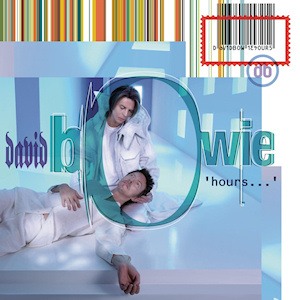
‘Hours…’ by David Bowie

Some might be tempted to assume that I own more Bowie albums than albums by people who aren’t Bowie. That obviously isn’t the case, but his records do pop up on the list with gratifying frequency.

‘Hours’ was his final album of the 20th century, and quite an interesting one in its own way. For the first time in many, many years, it was an album less defined by its style than by its content. This worked in its favour to a degree – it made it harder for the critics to beat it with a stick, and reviews were favourable at the time. On the other hand, it meant that any weaknesses in the album couldn’t be disguised by the underlying concept, something which helped cover the gaps in, say, Outside or Earthling. In place of grand artistic ideals came a set of simple songs, predominantly acoustic, that were to live or die by their own merit. Along with this came a willingness to embrace the past, both on the record itself, and in the live appearances he made around the same time (including a career-rejuvenating Glastonbury headline slot).

Twelve years on, and it’s hard to see ‘Hours’ as much more than a career footnote, especially with the knowledge that ‘Heathen’ was just around the corner. There are some really good moments present: ‘Thursday’s Child’ is a richly textured ballad, ‘What’s Really Happening’ and ‘Something In The Air’ are age-appropriate takes on classic Bowie. ‘The Pretty Things Are Going To Hell’, despite being self-referential to the point of extreme parody, is a great rock track, and ‘Survive’ is up there with his very best tracks – worth owning the album for on its own. Elsewhere, other tracks feel a little underwhelming either in production terms (‘Seven’), or in terms of the material itself. But it’s a perfectly decent album, and a pleasure to hear. If this had been how he bowed out of recording, it would have been a perfectly acceptable swansong – we’re very lucky that he raised his game once again.

Saturday, 15 October 2011

'Happy' by Why?

My first experience of Why? was at my first Soul Survivor. I knew of them, and was interested enough to see them play. The following day I gathered up as much back catalogue as possible. Their charm as a live band was infectious, and the recordings did a reasonably good job of matching up to this. A few years later, the band played at Spring Harvest. A lot had changed since then. They'd always had a fluid line up, but their basic instrumental mix of guitar-bass-mandolin-fiddle-drums had always remained constant. Then Nick Parker, co-founder and joint lead vocalist, left the band with his mandolin. The band that remained didn't replace him, and swapped violin for keyboard. Their Spring Harvest gigs that year were the sound of a band re-working their identity. The new recording on 'Look Back', the best of that they were selling at the time, were not career highlights, so 'Happy' really could have gone either way.
Fortunately, 'Happy' was the sound of a band carving out a new sound, and doing so very well. Ant Parker proved more than capable of leading the band on his own. His lyrics throughout 'Happy' were full of wit and imagination, and the musicians around him were probably the best line up Why had ever had. The album was produced by Craig McLeish who, as a member of Fat and Frantic, knew a few things about making music like this.
So, the songs roll out in an ongoing wave of cheerfulness, and even the weaker moments are covered by an overall sense of charm. Only the rap in 'Not Enough Room' is a genuine mistake. 'Think Yourself' and 'Spit' are on the edge of being a little too earnest for their own good, but the latter is redeemed by it's rhythmical trickery, and the former is saved by the audacity of rhyming 'perm an' all' with 'terminal' - surely a first.
The album essentially ends with 'Rock Idols of the 21st Century' - a tongue in cheek anthem which sets out their mission statement for the future. Sadly, the point was somewhat undermined by the band breaking up soon after - Ant Parker left, and that was that.
Except it wasn't - the last time I saw Why live was at Greenbelt soon afterwards. Astonishingly, even after losing both frontmen the band kept going. The result wasn't pretty - though once the remaining members ditched the name and reinvented themselves as a completely different plan, they did pretty well. Not the same, though.

Thursday, 29 September 2011

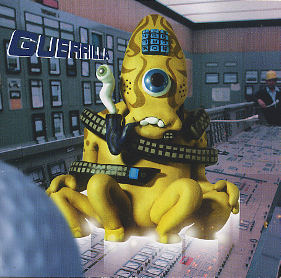
‘Guerrilla’ by Super Furry Animals

‘Guerrilla’ was my entry point to the Super Furry Animals. At the time, I found it a fascinating record. It was made, intentionally, to mix as many musical ideas together as the band could come up with. This, perhaps inevitably, is both its charm and its curse. It’s a hugely enjoyable album, but a difficult one to pin down.

Running through the album are some fairly mainstream-style tracks. The three singles – ‘Northern Lites’, ‘Do Or Die’ and ‘Fire In My Heart’ are all a pleasure to hear. Northern Lites’ in particular manages to be a good mix of the accessible and the quirky. ‘The Turning Tide’, ‘Night Vision’ and ‘The Teacher’ would have been comfortable fits on previous Super Furry Animals records. Beyond these, the album strikes out in a variety of directions, some of which are more successful than others. ‘Something Comes From Nothing’ is pleasingly hypnotic, and ‘The Door To This House Remains Open’ is well constructed. ‘Wherever I Lay My Phone’ hasn’t stood the test of time ever so brilliantly – a song based around a late 90s mobile ringtone was unlikely to date well. Still, it’s a good indication that the band were willing to give anything a try, and that’s to be admired.

Notably, the band hid a secret track at the beginning of the album. ‘Citizen’s Band’ could only be heard by rewinding the CD from the start of track 1, and doubtless lots of listeners would have missed it altogether. A shame – it’s a classic.

Thursday, 11 March 2010

‘Equally Cursed and Blessed’ by Catatonia

Time can be cruel to albums. It can take what seemed to be a great album and reduce it to mediocre, or it can take what seemed a mediocre album and make it seem pretty poor. ‘Equally Cursed and Blessed’ suffers as a result of this. I remember considering it the weakest Catatonia album at the time – it’ll be interesting to see at a later point whether I still think this, or whether their other albums will have suffered as badly.

The album came from an awkward point in the band’s career. Their previous album ‘International Velvet’ had been very successful, and there was no real warning that that would happen. As a result, the band weren’t really ready for it, and it was the next album which paid the price. Its biggest problem, is that it adopted the media construct of the band. The band were talked about because they were Welsh, and because of Cerys Matthews. This album plays up both of these factors to the detriment of everything else. The opener, ‘Dead From The Waist Down’ was one step away from being a very brave first single, but it doesn’t sound like the recording of a band – it just sounds like Matthews singing over a session orchestra. It’s also a bit irritating. ‘Londinium’ is more band-like, but it’s let down by a whinging set of lyrics that seem to cry ‘we don’t like London, because we’re from Wales’. Everyone knew this already. ‘She’s A Millionaire’ is better, but it, and so many other songs, are still let down by the emphasis on Matthews, and in particular, her increasing habit of over-Welshing her accent. Compared to her vocals on ‘Way Beyond Blue’, which combined a Welsh heritage with a genuinely nice singing voice, listening to the vocals on this album is like being bludgeoned to death with leeks. When the rest of the band really do get to demonstrate the fact that they’re still around, the result is tracks like ‘Storm The Palace’, a pointless noisy rant about the monarchy which suffers from such a poor mix, that any actual lyrical message is lost in a sea of reverb.

There are some good bits sprinkled through the album. ‘Karaoke Queen’ is a decent pop song, ‘Nothing Hurts’ is quietly lovely, and ‘Dazed, Beautiful And Bruised’ has just the right level of epic, but it’s not enough to set this album free from the bargain bin of history.

Monday, 11 January 2010

'Calling All Nations' by Noel Richards

What a contrast.

Imagine this. You're a well known worship leader with a heart to see stadiums used as worship venues. Your recent albums have been specifically tailored to provide music for such events, and over the last few years, you've relentlessly toured the country filling church halls and small venues building momentum for your plan. Then, after much planning and hard work, you fill Wembley Stadium. Then what?

If you're Noel Richards, you make a plan to hold a similar event in Berlin. Then, you get to work on your next album. But what it should it be like? You've done two albums of rousing stadium-style songs, so do you do another, or do you aim for something slightly more mature? The mature option is a sensible one, as there's a new wave of younger worship leaders snapping at your heels. So, a couple of years on, 'Calling All Nations' is released.

I'm not massively sure how the album came into my collection, but I'd not listened to it for a long time, a very long time. It's not great. It bobs along very tastefully, but there's nothing of any real excitement, and nothing that hadn't been done already, or wasn't being done better by someone else. I'd love to say there was some kind of saving grace - a really good song tucked away at the end, or a great arrangement, but... there's nothing. Even a guest vocal from Matt Redman sounds like it's being phoned in. By the end of the album, I was checking each track to see it it was the last one - never a good sign. It's a shame, because Richards was clearly passionate about what he was doing, and working with all the best intentions. You just can't really hear it.

'Californication' by the Red Hot Chilli Peppers

Maybe I'm remembering wrong, but I'm pretty sure that before the release of this album, the Red Hot Chilli Peppers were something of a spent force. Looking back at the statistics, the singles from the album didn't do ever so well, but this album sold a ridiculous number of copies, and was very well regarded. I'm pretty sure this was one of Tessa's from a long way back, and it's been a long time since I listened to it.

Eleven years on, it still sounds pretty good. Some of it is even excellent. 'Scar Tissue', 'Otherside' and the title track still sound fresh, and buried away in the world of the album track, 'Parallel Universe' is particularly good. After many years as walking cartoon characters, the band step up their musical game. Despite everything, Flea is an excellent bassist, but the album is strongest where he and John Frusciante guitar parts gel together.

There are still some points where the album drags. It's fifteen track long, which is two or three more than it needs to be, and Kleidis' lyrics are occasionally guilty of lapsing into old and tasteless habits, but the good points make the lesser points forgiveable.

Tuesday, 29 September 2009

'13' by Blur

The first album on this listening marathon that wasn’t bought by or given to me. This was originally Tessa’s, existing in my collection only through a copy on minidisk before we got married.

‘13’ was an end-of-an-era album for the band themselves, being the last full album they would record together as a four-piece band, though they weren’t to know this at the time. Never-the-less, it sounds like a bit of an ending, and it’s hard to imagine where the journey it takes them on would have progressed to if circumstances had been different.

Having moved away from their Britpop sound with ‘Blur’, ‘13’ sees a further digression into a more experimental form of music making, and as such, it’s an album of contrasts. First single and opening track ‘Tender’ is a gentle acoustic strum-along, made rather lovely by the accompanying gospel choir, and ‘Coffee + TV’ is a fairly conventional pop song (though a fine example of the genre). The rest of the album, however, is a combination of fast, angry blasts of frantic noise (‘Bugman’, ‘B.L.U.R.E.M.I.’) and dense washes of sustained chords and multi-layered guitar noise from Graham Coxon. Of these, most are very effective – only ‘Caramel’s too short on structure or tune to make much of an impression.

Only ‘No Distance Left To Run’ stands out as separate from the main body of the album. A bleak, sparsely accompanied song about the breakdown of Damon Albarn’s relationship with Elastica’s Justine Frischmann, it’s a track which eye-wateringly confessional, but beautiful with it. Rarely has someone’s dirty washing been aired in public so effectively.