Showing posts with label 1993. Show all posts

Monday, 2 August 2010

‘Gold Against The Soul’ by The Manic Street Preachers

The second by The Manic Street Preachers wandered into my collection more or less by accident. As far as I can remember, I picked it up very cheaply in a sale somewhere around the time of ‘A Design For Life’, gave it a couple of cursory listens, and then ignored it forever. As a result, I’m listening properly now for more or less the first time. The surprise, for me at least, is how accessible quite a lot of it is. ‘La Tristesse Durera’ and ‘Roses In The Hospital’ especially are well written and orchestrated pop songs. Ironically, the band themselves dislike the album because of this approach, considering it some kind of corporate sell-out. Perhaps they’re right, but I’d rather listen to these tracks than the louder, angrier sounds of ‘Nostalgic Pushead’ or ‘Symphony of Tourette’.

It’s not an album I’m going to spend lots of time listening to – along this big listening process, I’ve confirmed to myself that I’m really not that fond of the Manics, but it has its qualities.

Thursday, 11 March 2010

‘Emergency On Planet Earth’ by Jamiroqaui

The thing I find most interesting about ‘Emergency On Planet Earth’ is how successful it was. Think of Jamiroquai, and it’s almost certain that you’ll think predominantly of the ‘Travelling Without Moving Album’. However, that never made number one, and this did. The other interesting thing is how different this album is from his later ones. Jamiroquai have developed something of a reputation for churning out the same stuff again and again, but this really isn’t fair. This record is much looser and more organic than what would follow, and this is both a strength and a weakness.

The biggest problem with this album is its lack of discernable melodies. Once you’ve passed the first few tracks – ‘When You Gonna Learn’, ‘Too Young To Die’, and so forth – the album runs through a series of meandering tracks which just play along with little apparent structure. On the positive side, this doesn’t really seem to matter, as the music remains a joy to listen to. Picking out the obvious hooks is hard, but the weaving together of instruments from track to track is a delight. There are seventeen credited musicians on the album, as well as an undefined string section, so this shouldn’t come as much of a surprise. The strings in particular are far more prominent here than they would go on to be, and there’s a world-music feel which later albums would loose (though when I say ‘world-music’, I’m really only talking about didjeridoo and percussion).

After a couple of days letting this album play and play (I hadn’t listened to it for a good while), I couldn’t tell you much about the songs on the second half, but I did enjoy it. Worth coming back to.

Friday, 22 January 2010

‘Cutting Edge’ by The Cutting Edge Band (Delirious?)

There are lots of albums that I’ve enjoyed over the years, and a good number that I’ve really loved. Few of them, however, had played a more important role than the Cutting Edge albums. Though it was released in 1993, I heard it for the first time a year or so later, just as I was starting to lead worship at my home church, and just as I was starting to get to grips with the guitar. It’s no exaggeration to say that the Cutting Edge band, and later Delirious (as they were to become) wrote some of the most influential Christian songs of the decade, but they also had a style and sound that I found hugely appealing.

Listening back to the first album (I say album, at six tracks long, it’s only really an EP), it’s remarkable how conventional it sounds. Three of the tracks (‘Lord You Have My Heart’, ‘Thank You For Saving Me’ and to a lesser extent, ‘The Crucible For Silver’ went on the be sung in churches across the land, and the first two of those tracks would fit comfortably into all but the most traditional of them. The arrangements to all the songs on the album are very straightforward – at this stage, there wasn’t much of a band really. Front-man and writer Martin Smith, drummer Stewart Smith, and keyboard player Tim Jupp were in place, but the band wouldn’t finally adopt it’s permanent line-up until Cutting Edge 4. As a result, there’s no heavily determined band sound, which is perhaps why the songs spread so far. ‘The Message of the Cross’ and ‘The Singer’s Song’ are less congregationally suitable, but are still very explicitly worship songs. Only ‘What Is This Thing Called Love’ is a sign of how things would develop – less obvious, more performance oriented, and more rock-styled.

Wednesday, 20 January 2010

'Carnival of Clowns' by Phil and John

Phil and John were a reasonably well regarded Christian duo who released a series of albums towards the end of the eighties and through the beginning of the nineties. They make two appearances in my collection with their album ‘Providence’, and this one, though to be honest, I couldn’t have remembered a single one of their songs before listening to this again over the last few days.

They were often described as a sort of Christian Simon and Garfunkel, and though it’s a fairly lazy comparison, it’s hard to avoid. This album swings between gentle acoustic songs and more upbeat folk-tinged pop-rock. All in all, it’s a good listen – I’ve enjoyed it more than I expected to. One or two tracks are forgettable, but there’s a good collection of vocal harmonies on display, and the tone is varied enough to keep you interested. Some of the arrangements and production choices are showing their age, but this is an album almost twenty years old, so it’s of its time – a few too many bland backing vocals are the worst feature. Having said that, there’s a pleasant lack of pretension here, and a sense that the two artists are creating an album they’re very comfortable with. I can’t imagine listening to it a great deal in the normal course of things, but it may well come out for a spin every now and again.

Monday, 28 December 2009

'Buddha Of Suburbia' by David Bowie

After the release of 'Black Tie White Noise', his first album of the 90s, Bowie was offered the chance to write incidental music for the TV adaptation of the novel 'Buddha of Suburbia'. As well as doing so, he took elements from these compositions and reworked them to create the album of the same name. It wasn't released as a soundtrack, but it was promoted as one, and released at virtually the same time as his singles collection, and as a result, it failed to reach the charts, and was quickly deleted. A long overdue reissue appeared a few years ago, again with little fanfare, so Buddha remains almost certainly the least-heard album of Bowie's career, which is a shame, because it's really good.

'Black Tie White Noise' was a good album, but it revisiting his 'Let's Dance' stylings, it was a safe one. 'Buddha of Suburbia' displays a more interesting approach to Bowie's personal history, revisiting styles from 'Hunky Dory' right through to 'Low'. It's all understated, and a lot of it is instrumental, but there's more creativity in it than Bowie had shown for a long time.

The title track is a rather lovely acoustic ballad that could have come from 1972. It even uses the typical split octave vocals that 'Hunky Dory' featured so often. You'd be forgiven for assuming that the title track would set the tone for the whole album, but it doesn't. 'Sex And The Church', the second track, is a jittering six and a half minutes of processed vocals, minimal synths and clattering percussion. 'South Horizon' is a rambling piece of piano jazz shot through with trumpets - like the previous album, but without the structure. 'The Mysteries' is the longest track on the album, and as an oriental-inspired drifting soundscape, it could have come from 'Heroes'. 'Bleed Like Craze, Dad' is utterly different again - the sort of murky dance that 'Outside' would later consist of. 'Strangers When We Meet' sits in the middle of the album, and is the records strongest single track. It would go on to be re-recorded in a similar but tightened-up style for his next album, which is good, as it deserved to be heard by a wider audience. The rest of the album continues to wander from style to style until the end. 'Ian Fish, UK Heir' is the last new track on the album - so minimal, it's almost not there at all. It would have made a great, and brave album closer, but it's followed by a repeat of the title track with a pointless overdubbed guitar part from Lenny Kravitz.

All in all, it's an impressive piece of work, particularly given the context of its recording, and the fact that Bowie made it with only one real collaborator in only a couple of weeks. As well as being successful in its own right, it also paved the way for the next step in Bowie's creative rebirth. Well worth seeking out.

Friday, 4 December 2009

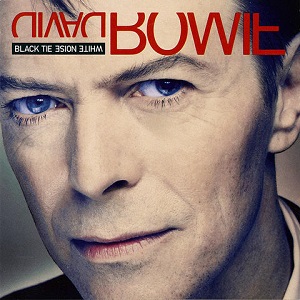
‘Black Tie White Noise’ by David Bowie

Bowie’s first album of the 90s, and his first solo release since Tin Machine, was unavailable for a long time, finally getting a reissue a few years ago. At the time, it had mixed fortunes. It reached number one, but fell of the radar pretty fast. It was received pretty well by those who heard it, and it deserved to be. For the first time in almost a decade, this is an album that shows Bowie both making an effort, and finding that this effort is paying off. It’s not one of his best, but it lays a firm foundation for his nineties renaissance, and it’s a fine album in its own right.

The album is book-ended by ‘The Wedding’, and ‘The Wedding Song’ – Bowie’s recent marriage runs through this album explicitly, as well as presumably giving him the self-assurance to produce something decent again. ‘You’ve Been Around’ is the first real track of the album. It sounds like it could have been a Tin Machine track, but it sounds vastly better than it would have done if this had been so.

The singles from the album all show Bowie returning to where he left off with ‘Let’s Dance’, or even ‘Young Americans’. ‘Jump They Say’ is particularly good, ‘Miracle Goodnight’ is less so. The title track is a brave attempt to deal with issues of race. The fact that it isn’t horrendously embarrassing a decade and a half later is a sign of success in itself. The rest of the album continues the slightly dancey production techniques and instrumentation, and it does so to good effect. ‘I Know It’s Gonna Happen Someday’ is a little overwrought, but the rest of the record is certainly good enough to compensate for this.