Showing posts with label David Bowie. Show all posts

Monday, 28 November 2011

‘Hunky Dory’ by David Bowie

My earliest experience of Bowie – and, I guess, one of my formative musical experiences – was listening to a compilation album called ‘Changesbowie’. This record began with ‘Space Oddity’, and continued with ‘Changes’, the track which opens ‘Hunky Dory’, Bowie’s first great album. I remember loving the track then, and I still love it now. It’s a perfect blend of ingredients. Bowie’s vocals croon through the verses then soar through the chorus, that classic bass-and-guitar riff between chorus and verse hits you every time, and Rick Wakeman’s reverb-y piano is an unalloyed delight. And so it continues. ‘Oh! You Pretty Things’ works in a similar vein. ‘Eight Line Poem’ is too brief and simple to be a favourite, but it’s a sweet addition. ‘Life On Mars’ is exceptional – genuinely, I don’t have the words to describe how good it is: the voice, the strings, the piano, the guitar solo – it couldn’t be improved. ‘Kooks’ is the ideal gentle and slightly daft contrast.

‘Quicksand’ is a growing beast of a track. ‘Fill Your Heart’ is arguably filler, but it’s a lot of fun. ‘Andy Warhol’ and ‘Song For Bob Dylan’ are well crafted tributes from an artist who, even at this stage, was willing to acknowledge his influences. ‘Queen Bitch’ is the only real indication of Bowie’s next step – ‘Ziggy Stardust’ would be another massive stylistic departure, and ‘The Bewlay Brothers’ is a complex and wordy way to finish, but no less impressive because of this.

‘Hunky Dory’ is great for a number of reasons. First of all, it was something of a one off. ‘The Man Who Sold The World’, his previous album, had been nothing like this. ‘Ziggy Stardust’, his next, would be nothing like this either. This made ‘Hunky Dory’ unique – special. It didn’t do ever so well at the time, but it’s now rightly seen as an absolute classic. Second of all, Bowie’s choice of fellow artists is pitched perfectly here. This was the first album to be recorded with the complete ‘Spiders From Mars’ line up, and Mick Ronson’s arrangements are a particularly fine feature. Alongside them, Rick Wakeman plays piano throughout. Many would cite Mike Garson as Bowie’s quintessential piano player, and with good reason, but Wakeman’s flourishing style is perfect here, and the album wouldn’t be the same without him.

I’d argue a strong case that this might be Bowie’s best album. I’d argue a similar case for three or four other albums, but there we are. Here endeth the letter ‘H’. The letter ‘I’ will feature less albums, but will feature considerably more solo albums by Brian Wilson, so that’ll be fun.

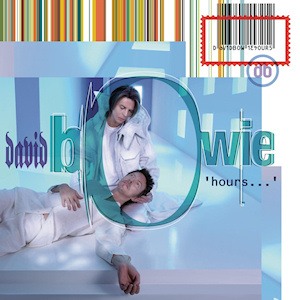
‘Hours…’ by David Bowie

Some might be tempted to assume that I own more Bowie albums than albums by people who aren’t Bowie. That obviously isn’t the case, but his records do pop up on the list with gratifying frequency.

‘Hours’ was his final album of the 20th century, and quite an interesting one in its own way. For the first time in many, many years, it was an album less defined by its style than by its content. This worked in its favour to a degree – it made it harder for the critics to beat it with a stick, and reviews were favourable at the time. On the other hand, it meant that any weaknesses in the album couldn’t be disguised by the underlying concept, something which helped cover the gaps in, say, Outside or Earthling. In place of grand artistic ideals came a set of simple songs, predominantly acoustic, that were to live or die by their own merit. Along with this came a willingness to embrace the past, both on the record itself, and in the live appearances he made around the same time (including a career-rejuvenating Glastonbury headline slot).

Twelve years on, and it’s hard to see ‘Hours’ as much more than a career footnote, especially with the knowledge that ‘Heathen’ was just around the corner. There are some really good moments present: ‘Thursday’s Child’ is a richly textured ballad, ‘What’s Really Happening’ and ‘Something In The Air’ are age-appropriate takes on classic Bowie. ‘The Pretty Things Are Going To Hell’, despite being self-referential to the point of extreme parody, is a great rock track, and ‘Survive’ is up there with his very best tracks – worth owning the album for on its own. Elsewhere, other tracks feel a little underwhelming either in production terms (‘Seven’), or in terms of the material itself. But it’s a perfectly decent album, and a pleasure to hear. If this had been how he bowed out of recording, it would have been a perfectly acceptable swansong – we’re very lucky that he raised his game once again.

Saturday, 12 November 2011

'Heathen' by David Bowie

When post-Tin-Machine Bowie albums were reviewed, they’d always be referred to as his best since ‘Scary Monsters’, only for their reputations to quickly slide down the scale a bit. Much of his work in the nineties and beyond was seen as interesting rather than good, but Heathen is generally seen as an exception to this, and rightly so. It’s a wonderful album – genuinely wonderful, and anyone who likes Bowie on any level should hear it if they haven’t done so.

I say this as a big fan of his later output. I think ‘1.Outside’ in particular is hugely underrated, and I enjoy ‘Hours’ and ‘Earthling’ a great deal as well, but I recognise that ‘Heathen’ is better on most levels than all of these. It’s an album which reflects Bowie’s age and status without being restrained by it making full use of the vocal register Bowie had at the time. It’s also a massive success for Tony Visconti, the quintessential Bowie producer who had been away from the fold for so long. Songs like ‘Sunday’ and ‘Slip Away’ ooze texture and warmth – ‘Slip Away’ in particular is a beautiful track, displaying a gentleness and melodic strength that runs through much of the album. A number of songs on the album contain more complexity than you pick up on first listen – ‘5.15 Angels Have Gone’ and ‘Everyone Says Hi’ in particular - but nothing on the album is inaccessible. Even the more experimental sounds of ‘I Would Be Your Slave’ and ‘Took A Trip On A Gemini Spacecraft’ are easy to listen to.

There aren’t really any true weak spots on ‘Heathen’. Only his version of ‘I’ve Been Waiting For You’ feels unnecessary (especially since it’s one of three cover tracks), but even this runs along in decent fashion.

Perhaps the best thing about ‘Heathen’ is how complete it sounds. It isn’t an album full of content which feels like it could have come from other Bowie albums. Even at this late stage in his career (he’s only released one album since, and there are precious few signs of any more on their way), Bowie could still create something worthwhile and special. That’s why he’s great.

Wednesday, 12 May 2010

‘Glass Spider’ by David Bowie

David Bowie’s Glass Spider Tour in 1987 was his biggest and most ambitious ever. It was also such a soul destroying experience that it made him believe forming Tin Machine would be a good idea. There was a video released at the time, and it resurfaced on DVD and CD a couple of years ago, presumably a release intended to put a lid on Bowie’s reignited critical acclaim. I’m reviewing this off the CD rather than the DVD, and I’m not sure whether that’s a good or bad thing. In it’s favour, it means I’m not distracted by the horribly garish visual imagery. On the downside, it means I’m not distracted from the horribly garish music. It also means that the music is periodically interrupted by seemingly random spoken gibberish, but in fairness, I’ve seen the DVD, and the visuals don’t help any of that make any sense.

‘Glass Spider’ begins with enormous self indulgence. A ridiculous electric guitar solo opens the album, interrupted by a shouted ‘shut up’ (words that any listener would choose at various points to follow) before Bowie’s dancers launch into an a-cappella segment of ‘Up The Hill Backwards’ which is an intriguing idea, though one that doesn’t really go anywhere. From here, the band launch into the absurd ‘Glass Spider’, a track that works far better as a concert introduction than as a song in its own right. Over a wash of synthesizers and guitar wailing, Bowie delivers a spoken monologue about the eponymous glass spider which must have been as inexplicable then as it is now. It’s worth noting, however, that when he actually sings his first line, his voice is in fine form. Glass Spider, for all its faults is far more interesting than ‘Day In, Day Out’, the next track, which is a two chord dirge that seems to go on for decades. It’s depressing to think that, at the time, ‘Day In, Day Out’ counted as one of his better songs. Almost as bad is ‘Bang Bang’ which follows, a track utterly unremarkable aside from the drum breaks and guitar squeals in the chorus which seem desperate to suggest that ‘Bang Bang’ is somehow an exciting piece of music. It isn’t, and it becomes painfully obvious as the song comes to a close that, four tracks in, we’ve yet to hear anything that’s actually good.

Happily, Bowie himself seems to have realised this as well, as the next run of tracks is a series of hits – ‘Absolute Beginners’, one of his finest 80’s tracks, ‘Loving The Alien’, one of his most interesting, ‘China Girl’, one of his most catchy, the much loved ‘Rebel Rebel’, and a genuinely good version of ‘Fashion’, the only ‘old’ track so far to gain anything from the eighties gloss slathered all over it. ‘Scary Monsters’ brings the big hitters section to an end, and is a perfectly decent rendition of a track that’s always seemed a bit middling to me. Disc one ends with a slightly odd version of ‘All The Madmen’, and a straight-down-the-line performance of ‘Never Let Me Down’, a track that really isn’t that bad, though a chorus would have improved it no end.

Disc two falls into a pretty obvious pattern of old songs good, new songs bad. ‘Big Brother’ sounds great, ‘’87 And Cry’ sounds terrible. ‘Heroes’ sounds good, because it can’t not sound good, and ‘Sons Of The Silent Age’ is a rare moment of actual artistry, even if it is somewhat overblown. ‘Time Will Crawl’ is rubbish. ‘Young Americans’ is a little anaemic, but it’s such a great song, you can forgive it its faults. ‘Beat Of Your Drum’ is forgettable, ‘The Jean Genie’ is fine, but played by numbers, ‘Let’s Dance’ is a perfectly good version of a track you may or may not be fond of. ‘Fame’ is less good – a hugely self indulgent performance that only seems to be included so Bowie can announce he wrote it with John Lennon. For unfathomable reasons, he segues it into ‘London Bridge Is Falling Down’, which suggests to me that he’s finding the whole experience as tiring as the listener must be. ‘Time’ comes next, and it stands out like a sore thumb. It’s a great performance though, let down only by the horrible synth horns towards the end. The record ends with ‘Blue Jean’ and ‘Modern Love’, two of the shallowest tracks in the Bowie catalogue, but tracks that are at least catchy and fun.

It would be wrong to label the whole Glass Spider experience as bad. There are good bits, even great bits, though they’re rarely sustained over even the length of a track. But alongside the highlights, there are great depths to the album as well, and you can’t help but think that even if you pruned these out and made a single disc, you’d still be left with a slightly crummy product. So, unless you’re a big Bowie fan, this is probably one to actively avoid.

Thursday, 25 March 2010

‘Fashion Rocks EP’ by David Bowie & Arcade Fire

Here’s a little curio that’s too short to get much attention. Recorded a couple of years ago at some glitzy fashion do, the ‘Fashion Rocks EP’ brings together two great acts over three short tracks.

It begins with ‘Life On Mars?’, performed by Bowie more-or-less alone, backed only by Mike Garson’s piano. It’s a tough one. Bowie’s voice is a long way off being able to hit those high notes now, and the songs transposition does rob it of a lot of its magic, but at the same time, it’s such a great song, it can’t fail to be good, and the songs re-arrangement makes the best of the job.

Arcade Fire join for the next two songs, their own ‘Wake Up’, and Bowie’s ‘Five Years’. Both of these are great, though it’s the latter that’s most interesting. Because the band are so big, and produce so much sound, Bowie’s contribution struggles to make much impact during ‘Wake Up’. They do, however, bring a ramshackle energy to ‘Five Years’ that complements Bowie’s part brilliantly.

The performance was released as a straightforward download, and in fairness, didn’t deserve anything more than that. Nevertheless, it’s a good listen for a fan of Bowie or Arcade Fire, so well worth hearing if you like both.

Thursday, 4 March 2010

‘Earthling’ by David Bowie

Throughout the nineties, Bowie released five solo albums, a slower work rate than his seventies peak, put an impressive tally for an artist so far into his career. ‘Earthling’ was the fourth album of the decade. It sits slightly awkwardly between the more ambitious and experimental ‘Outside’ and the back to basics approach of ‘Hours’. As a result, it tends to be somewhat dismissed, though on its release it had a reasonably warm reception.

‘Earthling’ is often referred to as Bowie’s drum and bass album, and this is fair to a degree. Certainly the album has one foot firmly planted in the world of dance. There is an awful lot of fast, programmed percussion throughout Earthling, and the album received a certain amount of criticism for jumping the bandwagon. This criticism is, I think, unfair on two counts. For a start, drum and bass was never really a dominant genre outside the world of the music press – Bowie’s flirtation with it was never going to be an over-populist gimmick, so he deserves credit for it on that basis. Secondly, despite the rhythmic dominance of the record, the quality of song writing is never sacrificed. In fact, there are some excellent songs on ‘Earthling’, comparable to the number on ‘Outside’, but without so much of the filler. ‘Little Wonder’, ‘Battle For Britain’, ‘Dead Man Walking’ and ‘Seven Years In Tibet’ could have all been stripped of their programming, and still worked. ‘Earthling’ also contains a number of musical flourishes from Bowie’s own history, demonstrating an increasing awareness and willingness to plunder his own roots – ‘Dead Man Walking’ is built around the same riff as ‘The Supermen’, Mike Garson’s piano outro to ‘Battle For Britain’ could have come from ‘Aladdin Sane’, and Bowie’s cockney vocals on ‘Little Wonder’ could have been recorded at the end of the sixties. Amongst these familiar touches are lots of new things – ‘Satellites’ and ‘Telling Lies’ are both pretty different from anything he’d previously recorded, and ‘Law’ is virtually unrecognisable as Bowie (and perhaps, therefore, not the best choice for a closing track).

All in all, it’s a fine album in its own right, and more than a decade on, it looks increasingly likely that it’ll remain as Bowie’s final new direction. The three albums he’s released so far have been good, or great – better than this, maybe – but all of them have been comparatively safe. It’s very unlikely he’ll do something like this again.

Wednesday, 10 February 2010

‘Diamond Dogs’ by David Bowie

‘Diamond Dogs’ is one of the pivotal albums in Bowie’s career, though given the twists and turns on display through his recorded output, you could make that claim about virtually any of them. However, ‘Diamond Dogs’ was the last of Bowie’s run of glam-rock-type albums that established him as a major star in the early seventies. Having abandoned his Ziggy Stardust persona after ‘Aladdin Sane’, ‘Diamond Dogs’ allowed him to work the remnants of Ziggy out of his system. As a result, bits of the album are an obvious continuation of earlier work, particularly the title track, and ‘Rebel Rebel’. ‘Rebel Rebel’, incidentally, is a song which contains such a condensed essence of glam, it more or less rendered glam obsolete. It was time for Bowie to move on.

This was the first Bowie album since ‘The Man Who Sold The World’ to feature no other members of the Spiders outfit. However, by retaining pianist Mike Garson, and re-recruiting Herbie Flowers as bassist and Tony Visconti as producer, Bowie demonstrated a willingness to mix and match elements of his own past which he would continue to do throughout his career. Mike Garson underpins much of the record. He has no standout pieces as he did on Aladdin Sane, but his piano flourishes through ‘Sweet Thing’ and ‘Candidate’ in particular are essential to the feel of the record. Because Bowie played most of the lead guitar on the album himself, there’s no other figure to dominate the album in quite such a way.

Away from the glam aspects of the album, Bowie develops a more soulful side. ‘Sweet Thing’ is an obvious example of this, but ‘When You Rock And Roll With Me’ is fairly different from all his previous output as well. It’s the conceptual stuff, however, that sticks from this album. It opens with ‘Future Legend’ a horribly disturbing (or ridiculous, if you like) monologue about ‘Hunger City’, the location for much of the albums descriptions. Bowie’s original plans to base a concept album around ‘1984’ were opposed by Orwell’s estate, but the influence is hardly hidden – naming your last two tracks ‘1984’ and ‘Big Brother’ is less than subtle, though both tracks are excellent. ‘1984’ is the clearest signal of the ‘Young Americans’ which was to come, and ‘Big Brother’ is a suitable filling climax, descending as it does into the disorientating ‘Ever-Circling Chant of the Skeletal People’.

It would be easy to sneer at ‘Diamond Dogs’ as the sort of ridiculous concept album which made the seventies something of a joke, but to do so would be unfair for two reasons. Firstly, in making this his last album of type, making him well ahead of the pack. ‘Diamond Dogs’ came out in 1974. Within two years, he would have made ‘Young Americans’ and ‘Station To Station’, and be holed up in Berlin making ‘Low’. By contrast, it would take Queen until 1977 to attempt to abandon glam rock, and that was with the slightly uncomfortable ‘News of the World’. Secondly, and more importantly, it’s just really good.

Thursday, 4 February 2010

'David Live' by David Bowie

When Bowie toured Ziggy, he was accompanied by four people – a guitarist, a bassist, a drummer, and a pianist. By the time he was taking the Diamond Dogs tour across America, he was heading a band of eleven. As a result, the live album of the tour is, in parts, busier, fuller, more bloated, and messier than earlier live recordings.

The bulk of the album is material taken from ‘Diamond Dogs’ and ‘Aladdin Sane’, Bowie’s most recent two albums (sensibly discounting ‘Pin-Ups’). This is the material that works best. ‘1984’ makes for an excellent start, and ‘Sweet Thing’ and ‘Big Brother’ sound fantastic. The title track from ‘Aladdin Sane’ is successfully reworked for the stage, and ‘Time’ and ‘Watch That Man’ both benefit from the additional musicians.

Older songs are more of a mixed bag. ‘Suffragette City’ works well as a riot of noise, and ‘Space Oddity’ makes the transition well, but ‘The Width Of The Circle’ sounds more bloated than usual (and it’s bloated enough in the first place), and ‘Rock ‘n’ Roll Suicide’ is drained of its power by too much woodwind making it something of an anti-climax.

Most interesting are the two cover tracks. ‘Knock On Wood’ is reasonably disposable, but it carries a good sense of fun. ‘Here Today, Gone Tomorrow’ is something a departure – a more soul-influenced song which is the only real indication up to this point of the ‘Young Americans’ sound that was to come. As the tour progressed, these influences would apparently play a much more significant role, and it’s a shame, retrospectively, that the album wasn’t recorded during this later period.

As a result, this album can’t claim to be essential, or even mildly important, but it’s a decent enough listen with some good moments.

Wednesday, 3 February 2010

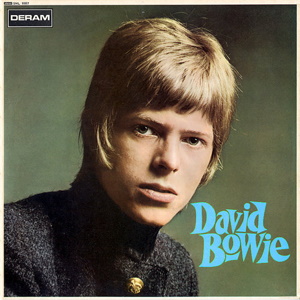
''David Bowie' by David Bowie

There are good reasons for quietly disowning a debut album later in your career. Perhaps it’s clearly inferior to the rest of your work, or perhaps it’s just too stylistically different from later albums to make sense of. Neither of these reasons really explains the status of ‘David Bowie’, however. For many years, Bowie’s quasi-official discography has had ‘Space Oddity’ at the beginning, and ‘David Bowie’, the album that came first, has been largely overlooked.

In terms of quality and style, it’s a mixed bag. Some if it is genuinely very good, other bits, less so. ‘Uncle Arthur’ and ‘Little Bombadier’ are the sort of character study that Blur would go on to forge a career with, and its lots of fun, but a bit twee.

‘Sell Me A Coat’ has a lovely arrangement and melody, especially in its verses. ‘Love You Til Tuesday’ is a fantastic sixties-style gem (though close to being ruined by the last few seconds). ‘When I Live My Dream’ is a bit schmaltzy, but it works.

‘Rubber Band’ mixes unconventional arrangements with bizarre lyrics, but generally remain interesting, and fairly good. ‘We Are Hungry Men’ is a slightly deranged pointer in the direction of ‘Hunky Dory’ and, in a sense, ‘Diamond Dogs’. ‘Please Mr Gravedigger’ is possibly the oddest album closer in the Bowie catalogue – unsettling, off-key, barely even a song, it’s a difficult lesson, and a key indication of Bowie’s determination to follow his own path.

At times, the affectations of the album veer towards irritating, and it may not have dated amazingly well, but there’s plenty to enjoy here. It’s certainly more interesting than ‘Space Oddity’, even if it has nothing to match the quality of that album’s title track, and although there was a jump of styles between those two albums, the jump between ‘Space Oddity’ and ‘The Man Who Sold The World’ was bigger still. On the plus side, because of its relegation to ‘largely forgotten status’, this album can be picked up cheaply and easily.

Monday, 28 December 2009

'Buddha Of Suburbia' by David Bowie

After the release of 'Black Tie White Noise', his first album of the 90s, Bowie was offered the chance to write incidental music for the TV adaptation of the novel 'Buddha of Suburbia'. As well as doing so, he took elements from these compositions and reworked them to create the album of the same name. It wasn't released as a soundtrack, but it was promoted as one, and released at virtually the same time as his singles collection, and as a result, it failed to reach the charts, and was quickly deleted. A long overdue reissue appeared a few years ago, again with little fanfare, so Buddha remains almost certainly the least-heard album of Bowie's career, which is a shame, because it's really good.

'Black Tie White Noise' was a good album, but it revisiting his 'Let's Dance' stylings, it was a safe one. 'Buddha of Suburbia' displays a more interesting approach to Bowie's personal history, revisiting styles from 'Hunky Dory' right through to 'Low'. It's all understated, and a lot of it is instrumental, but there's more creativity in it than Bowie had shown for a long time.

The title track is a rather lovely acoustic ballad that could have come from 1972. It even uses the typical split octave vocals that 'Hunky Dory' featured so often. You'd be forgiven for assuming that the title track would set the tone for the whole album, but it doesn't. 'Sex And The Church', the second track, is a jittering six and a half minutes of processed vocals, minimal synths and clattering percussion. 'South Horizon' is a rambling piece of piano jazz shot through with trumpets - like the previous album, but without the structure. 'The Mysteries' is the longest track on the album, and as an oriental-inspired drifting soundscape, it could have come from 'Heroes'. 'Bleed Like Craze, Dad' is utterly different again - the sort of murky dance that 'Outside' would later consist of. 'Strangers When We Meet' sits in the middle of the album, and is the records strongest single track. It would go on to be re-recorded in a similar but tightened-up style for his next album, which is good, as it deserved to be heard by a wider audience. The rest of the album continues to wander from style to style until the end. 'Ian Fish, UK Heir' is the last new track on the album - so minimal, it's almost not there at all. It would have made a great, and brave album closer, but it's followed by a repeat of the title track with a pointless overdubbed guitar part from Lenny Kravitz.

All in all, it's an impressive piece of work, particularly given the context of its recording, and the fact that Bowie made it with only one real collaborator in only a couple of weeks. As well as being successful in its own right, it also paved the way for the next step in Bowie's creative rebirth. Well worth seeking out.

Friday, 11 December 2009

‘Bowie At The Beeb’ by David Bowie

Thirty-seven tracks of Bowie goodness, taken from Bowie’s session recordings between 1968 and 1972. Between these years, Bowie underwent an number of musical transformations, and this collection charts this journey brilliantly. The first section of the first disc contains songs from the outskirts of his back catalogue, the pre-‘Space Oddity’ days. Though generally neglected, these are great tracks, or at least great versions – light hearted, but well constructed, arranged and performed. The next set, the ‘Space Oddity’ era stuff is slightly earnest singer-songwriter stuff, but again, done well. The second half of the first disc is ‘The Man Who Sold The World’ era recordings, and they drag a little, truth be told. They’re fine, but they tend to go on for longer than they need to.

The second disc is the more instantly recognisable, consisting almost exclusively of tracks from ‘Hunky Dory’ and ‘Ziggy Stardust’. In a sense, that makes it the more interesting of the discs, as these are the songs that first defined the artist. At the same time, these songs are so familiar to anyone interested enough to listen to this correction, that they capture the attention less than disc one. Either way, there are some great performances of some fantastic songs here, whether they’re well known or not.

Altogether, they make for an extremely good collection of recordings. Happily, the compilers have also elected to keep some of the surrounding chat from the radio broadcasts. This is very much of its time, but it’s great to hear, even if John Peel sounds like he’s fighting off some kind of sleeping tablet overdose. Bowie himself comes across as chatty and witty, though slightly nervous. The only real regret you have listening to this, is that Bowie didn’t return to the BBC that much through the rest of the decade – some sessions from the late 70s would have been a joy to hear, but in reality, his next BBC sessions were with Tin Machine, and it’s unlikely that anyone would really want them released now.

Friday, 4 December 2009

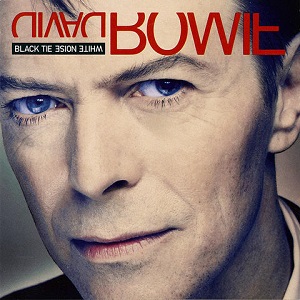
‘Black Tie White Noise’ by David Bowie

Bowie’s first album of the 90s, and his first solo release since Tin Machine, was unavailable for a long time, finally getting a reissue a few years ago. At the time, it had mixed fortunes. It reached number one, but fell of the radar pretty fast. It was received pretty well by those who heard it, and it deserved to be. For the first time in almost a decade, this is an album that shows Bowie both making an effort, and finding that this effort is paying off. It’s not one of his best, but it lays a firm foundation for his nineties renaissance, and it’s a fine album in its own right.

The album is book-ended by ‘The Wedding’, and ‘The Wedding Song’ – Bowie’s recent marriage runs through this album explicitly, as well as presumably giving him the self-assurance to produce something decent again. ‘You’ve Been Around’ is the first real track of the album. It sounds like it could have been a Tin Machine track, but it sounds vastly better than it would have done if this had been so.

The singles from the album all show Bowie returning to where he left off with ‘Let’s Dance’, or even ‘Young Americans’. ‘Jump They Say’ is particularly good, ‘Miracle Goodnight’ is less so. The title track is a brave attempt to deal with issues of race. The fact that it isn’t horrendously embarrassing a decade and a half later is a sign of success in itself. The rest of the album continues the slightly dancey production techniques and instrumentation, and it does so to good effect. ‘I Know It’s Gonna Happen Someday’ is a little overwrought, but the rest of the record is certainly good enough to compensate for this.

Thursday, 3 December 2009

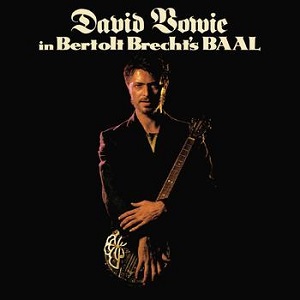
‘Bertolt Brecht’s Baal’ by David Bowie

As Bowie journeyed through the 80s, releasing albums that were getting increasingly rubbish, he also undertook a variety of side projects that were, on the whole, far more interesting than his proper work. It was also the period in which he stretched his wings as an actor, with mixed success. One of the roles he played during this period was the part of Baal in a TV adaptation of Bertolt Brecht’s play. As part of this, he recorded five songs for the soundtrack which were released as an EP at the time, and re-released a couple of years ago as a download.

Bowie’s voice lends itself well to ‘Baal’s Hymn’, the track which outlines his character’s journey. The middle three songs – ‘Remembering Marie A’, ‘Ballad of the Adventurers’ and ‘The Drowned Girl’ are all suitably atmospheric. ‘The Dirty Song’, which closes the album, is short, throwaway, and slightly unpleasant, but it’s all in character, so it’s hard to criticise.

At five tracks long, and none of them written by him, it could never be more than an interesting curio in his career, but judged on those terms, the EP is fairly successful.

Sunday, 29 November 2009

'BBC Radio Theatre, June 2000' by David Bowie

Back around the turn of the milennium, Bowie underwent something of a revival. 'Hours' was released to positive reviews, and he headlined Glastonbury, and as a result, the cash-ins began. The best of these was a double disc set of BBC sessions from the early seventies, and tucked away as a bonus disc came this, a recording from a tiny gig at the BBC Radio Theatre. It's never been released on its own, so it's currently unavaliable, which is a real shame, as it's excellent.

In keeping with his 'singer-songwriter' persona of the time, there's nothing flash about this - just Bowie, his band, and fifteen songs from his past and present. The band is excellent, a mix of old hands (Mike Garson and Earl Slick, who both played with Bowie in the 70s), 90s stalwarts (Sterling Campbell and Gail Anne Dorsey who'd been knocking around since 'Outside' and a sprinkling of fresh blood. Between them, they faithfully recreate songs from as far back as 'The Man Who Sold The World', right through to 'Survive' and 'Seven'. They gel together fantastically - the piano and guitar both get to shine without over-dominating the other.

The great strength of the album is its variety. Bowie doesn't depend on the big hits here - well known stuff like 'Ashes To Ashes' and 'Lets Down' sit comfortably along lesser known tracks like 'This Is Not America' and 'Cracked Actor', and even the less loved nineties era is well represented, which shows admirable pride in his most recent work. The only real criticism is the exclusion of the half-dozen other tracks performed at the same gig.

Sunday, 1 November 2009

'Aladdin Sane' by David Bowie

This is a great record. Often seen as a poor relation to 'Ziggy Stardust', I prefer this for all sorts of reasons. It may have been recorded in a rush during what must have seemed an endless tour, but Bowie is on such a roll here, that everything more or less comes out golden.

Stylistically, it's more muscular than it's predecessor. Not only had Bowie's performance skills continued to improve, but the support from his band is noticeably stronger. Mick Ronson, Bowie's guitarist and right-hand-man at the time earns his reputation as a great guitarist, but the real revelation is Mike Garson, Bowie's touring keyboard player, joining him on record for the first time. His contributions - sometimes bafflingly avant-garde, such as in the title track, and sometimes beautifully delicate, such as in 'Lady Grinning Soul' are utterly wonderful.

The two singles from this album are both brilliant. 'Drive In Saturday', often overlooked, is a perfectly created pop song. It's a measure of Bowie's confidence at the time that he was willing to give the song away to Mott the Hoople who happily turned it down. 'The Jean Genie', on the other hand, sounds like it was thrown together in a five minute window, but is no less fantastic for it. Other highlights include the powerful opener 'Watch That Man', the somewhat deranged 'Time', and a re-recorded version of 'The Prettiest Star' - formerly a fairly weak single, dramatically improved here.

The only weak spots are 'Panic In Detroit' which bumbles along pointlessly for its duration, and 'Let's Spend The Night Together' - a Rolling Stones cover that isn't bad, but goes to illustrate how far ahead of his contemporaries Bowie was operating. It's a shame he didn't drop it to give 'John, I'm Only Dancing' a well deserved good home.

Saturday, 10 October 2009

'A Reality Tour' by David Bowie

Another 'not an album' listen - this is the soundtrack to a DVD release, although it will be released on CD next year. Recorded live in Dublin on Bowie's last major tour (to date, though it's looking increasingly unlikely he'll ever do another), this presents 30 odd tracks spanning the whole of his career.

There's a mildly surprising emphasis on his more recent work - welcome, as it's good - which shows a real confidence in his latter albums, but they're balanced out with some major hits ('Rebel Rebel', 'Changes', 'Ashes To Ashes') and some more obscure stuff ('Fantastic Voyage', 'Be My Wife', and 'Sisiter Midnight', co-written with Iggy Pop). His band are talented and versatile enough to play the songs pretty much as they were. 'Rebel Rebel' gets a new intro, 'Loving The Alien' is acoustic, but everything else is much as it was originally. Only a few key changes demonstrate Bowie's increasing age - but then 'Life On Mars' must have been difficult to sing in 1973, let alone thirty years later.

If this is to be the final major live recording from Bowie, it's a good way to stop.

Saturday, 26 September 2009

'"Heroes"' by David Bowie

An interesting way to start. This appears first on my mp3 player, as the ordering system presumeably struggles with the speech marks in the title. A good one to begin with though, as I've never quite got to grips with it.
I can't quite remember how I got hold of this album, but it was certainly at the point where I was plugging the few remaining gaps in my Bowie collection. I've certainly listened to it a few times, but I've never given it much attention 'til now.


It was never going to be a conventional record. Recorded in Berlin as a follow-up to Low, Bowie was in the middle of a very expermental phase of his career, but there's no easy beginning here. 'Beauty and the Beast' is a relentless one-chord wall of noise, with backing vocals apparently contributed from a sackful of cats. The record company must have loved putting it out as a single - even now, it's surely one of his most ambitious attempts to break the charts. There's no let up after it either - 'Joe The Lion', and 'Blackout' both sound like each instrument is playing a different song to everyone else, while Bowie appears to be making up his melodies on the spot. It's surprising, then, that 'Heroes' itself manages to be so good - at track 3, it's the first point at which every contributor realise they should be working together. Bowie's vocal, part crooning and part wail-of-despair, is surely one of the best he ever did. 'Sons Of The Silent Age' is the only other vaguely normal song on the album, though quite what it's about is anyone's guess.


As with Low, half of the album is instrumental. The first such track - 'V-2 Schneider' is surprisingly well structured, with a discernable bass-line, and a repeating saxophone motif. The others are far more abstract, though all very atmospheric in differing ways. The album finishes with 'The Secret Life of Arabia', which sounds like a left-over from the first half, and is an odd way to finish, being neither a fitting end to the instrumental section, or a particularly good song in it's own right. All of which may very well have been deliberate.