Wednesday, 7 December 2011

‘Imagination’ by Brian Wilson

A word of advice. If you’re one of the greatest songwriters of all time, and you’ve been responsible for some of the best albums ever made, be careful with your album titles. Calling your record ‘Imagination’ prompts a certain expectation. This record struggles to live up to that.

It isn’t a bad album, as such. Wilson’s voice is in reasonable shape, and his ear for harmony arrangements is as strong as ever. The songs themselves are okay. There’s nothing on this album that’ll change your life, but greater depths have been plumbed throughout Beach Boys history. The albums greatest failing is its overall sound – it’s very, very polished, when a few rough edges might have helped.

The two most familiar tracks are old Beach Boys tracks. ‘Keep An Eye On Summer’ and ‘Let Him Run Wild’ are both decent reworkings – the latter, in particular, works quite well several keytones down and delivered from a mature perspective. The greatest strength of this album is what it did to Wilson personally. After its creation, he gained enough confidence to tour again, which in turn lead to ‘Pet Sounds’ live, which in turn lead to ‘Smile’. A small step which makes this album more important than it is good.

‘If You’re Feeling Sinister – live at the Barbican’ by Belle and Sebastian

Nine years later, Belle and Sebastian returned to their second album for a one-off gig in which they played the record through in its entirety. The gig was recorded, then released via iTunes for charity. The setlist was chosen as the band themselves weren’t ever so happy with the final result of the original album. Personally, I’d rather listen to this version.

There are no radical departures here – every track is played more or less as it was originally, but with a greater confidence – almost a swagger. Almost a decade on, the difference in how the band sounds is striking. There’s a great sense of relaxation throughout this album, and this brings the album a real sense of joy. Tracks like ‘Like Dylan In The Movies’ and ‘Get Me Away From Here, I’m Dying’ lose their slightly pained and restrained edge and become songs that are a sheer pleasure to listen to.

It’s rare, I imagine, for an exercise like this to be any more than an exercise in vanity, or at best, something which works well on stage but is unnecessary on record. But not this time – this is great.

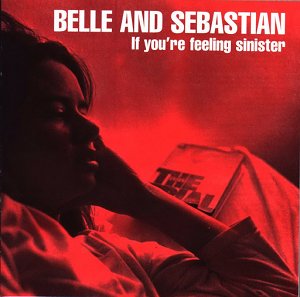
‘If You’re Feeling Sinister’ by Belle and Sebastian

Second album by Belle and Sebastian, and released only five months after their debut, ‘If You’re Feeling Sinister’ is a great album in many ways, though not without its issues. The songs on the record are superb – whereas ‘Tigermilk’ is a little patchy, ‘If You’re Feeling Sinister’ is pretty much free of weak spots, which is remarkable given the short length of time between the two records. Having said that, the arrangements and production throughout the record struggle to match the quality of the material. Too many of the backing tracks sound a little feeble – like the band aren’t quite sure of what they should be doing. No-one seems quite comfortable with the material, as though they know it’s good, but they’re not sure how to represent this. So, a good album to hear, but given the choice, I’d always opt for the next on the list. Here goes…

‘I’m Waking Up To Us’ by Belle and Sebastian

‘I’m Waking Up To Us’ was the final single released by Belle & Sebastian before they settled into the more conventional approach of releasing singles taken from their albums. Their next release was the ‘Dear Catastrophe Waitress’ album – a big step forward in terms of their production values and arrangements. This single shows the signs of that – the title track is bold and ambitious in its scope, and the other tracks show a developing confidence and humour which would continue to grow through subsequent releases. Not their strongest set of songs, but it doesn’t outstay its welcome by any means.

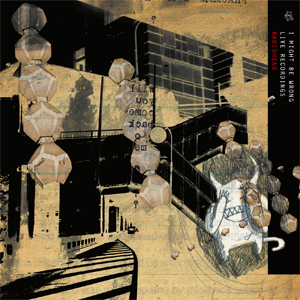
‘I Might Be Wrong - Live Recordings’ by Radiohead

It’s difficult to see the purpose of this record. A live album? A ‘rounding up’ of the ‘Kid A’ / ‘Amnesiac’ era? An opportunity to show how tracks from these two albums worked in a live context? In some ways, it’s all of these things – in other ways, it’s none of them.

It’s too short to work as a convincing live album. In fairness, it was released and priced as a mini-album, so that’s perhaps an unfair criticism, but it seemed (and still seems) a waster opportunity – a few earlier tracks would have made welcome additions. Does it round off the era? I guess so, though you could say the same about ‘Hail To The Thief’, which arguably does the job a little better. So, an opportunity. Would Radiohead really have wanted to prove themselves like this? It flies in the face of the more self-consciously difficult approach they’d been working with. And, to be fair, it doesn’t take a great deal of imagination to listen to the studio versions of ‘Idioteque’ or ‘Morning Bell’, say, and not see how they would work on stage.

Three tracks, though, make this worthwhile. ‘Like Spinning Plates’ is the most radical departure from the album version, replacing the programmed backing track with a simple circular piano accompaniment to great effect. ‘Everything In Its Right Place’ starts in the same place as the ‘Kid A’ version, but mutates into a pulsing beast of a track. ‘True Love Waits’, the closing track, is the albums main draw – the only track not available elsewhere. It’s radically different to the rest of the album: a solo performance on Thom Yorke’s acoustic guitar, but it’s a thing of beauty.

The album as a whole – decent enough, but a footnote, really.

Wednesday, 30 November 2011

‘I Just Wasn’t Made For These Times’ by Brian Wilson


A record which is as confusing, as baffling, and as hard to explain as the man who made it. ‘I Just Wasn’t Made For These Times’ was made in the mid 90s as the soundtrack to a documentary about Wilson’s life. As such, there are a number of things about it which are commendable.

Firstly, it would have been easy not to bother. A lazily assembled compilation of existing Beach Boys tracks would have been easier to put together, so it’s good that this wasn’t done. Secondly, it would also have been easy for Wilson to churn out an obvious set of re-recorded ‘classics’. This would have made for a more appealing commercial prospect, but not a better record. Instead, this record skirts around the edges of Wilson’s song-writing catalogue, touching on tracks that are easy to miss – ‘Meant For You’, ‘This Whole World’, ‘Let The Wind Blow’ and ‘Til I Die’ are particularly good choices. Less worthy of inclusion are ‘Love And Mercy’ and ‘Melt Away’, two solo-era tracks credited to Wilson and his doctor/therapist/manager, Eugene Landy, the man who broke Wilson’s drug dependence and began restoring him to a normal life, in return for the minor concession of having complete control over every aspect of his life, and the right to profit from any work he went on to complete – behaviour which resulted in complicated legal action and an eventual revocation of his license to practice. ‘Love And Mercy’ is a pleasant enough track – ‘Melt Away’ is weaker. Perhaps the most interesting track on the album is ‘Still I Dream Of It’, a home demo from the mid-seventies which, I think, had been unreleased until this point.

Alongside the creditable aspects of this work are some fairly major drawbacks. Of course, more work has gone into this album than a simple round-up of the relevant Beach Boys tracks would have been. Unfortunately, that hasn’t resulted in a better album. Wilson’s backing band and singers on this project are a collection of anonymous session players who lack both the family-honed warmth of the Beach Boys or the faithful recreation of Wilson’s later backing band. Worse still, Wilson’s voice is not in good shape here. No-one would expect it to be as good as it was in the sixties, but here it’s in a very fragile condition – a world away from what it would recover to by the time he started touring ‘Pet Sounds’ and recreating ‘Smile’.

So, all in all, this is something of a non-essential record – one for the dedicated fans only. But consider this – this was the first time Wilson had really had the confidence to look back over his life’s work and do something with it. A few years on, and he’d be playing ‘Pet Sounds’ to audiences across the world. A few years later, he finished ‘Smile’. Maybe this was a first step? If so, worth it.

Monday, 28 November 2011

‘Hunky Dory’ by David Bowie

My earliest experience of Bowie – and, I guess, one of my formative musical experiences – was listening to a compilation album called ‘Changesbowie’. This record began with ‘Space Oddity’, and continued with ‘Changes’, the track which opens ‘Hunky Dory’, Bowie’s first great album. I remember loving the track then, and I still love it now. It’s a perfect blend of ingredients. Bowie’s vocals croon through the verses then soar through the chorus, that classic bass-and-guitar riff between chorus and verse hits you every time, and Rick Wakeman’s reverb-y piano is an unalloyed delight. And so it continues. ‘Oh! You Pretty Things’ works in a similar vein. ‘Eight Line Poem’ is too brief and simple to be a favourite, but it’s a sweet addition. ‘Life On Mars’ is exceptional – genuinely, I don’t have the words to describe how good it is: the voice, the strings, the piano, the guitar solo – it couldn’t be improved. ‘Kooks’ is the ideal gentle and slightly daft contrast.

‘Quicksand’ is a growing beast of a track. ‘Fill Your Heart’ is arguably filler, but it’s a lot of fun. ‘Andy Warhol’ and ‘Song For Bob Dylan’ are well crafted tributes from an artist who, even at this stage, was willing to acknowledge his influences. ‘Queen Bitch’ is the only real indication of Bowie’s next step – ‘Ziggy Stardust’ would be another massive stylistic departure, and ‘The Bewlay Brothers’ is a complex and wordy way to finish, but no less impressive because of this.

‘Hunky Dory’ is great for a number of reasons. First of all, it was something of a one off. ‘The Man Who Sold The World’, his previous album, had been nothing like this. ‘Ziggy Stardust’, his next, would be nothing like this either. This made ‘Hunky Dory’ unique – special. It didn’t do ever so well at the time, but it’s now rightly seen as an absolute classic. Second of all, Bowie’s choice of fellow artists is pitched perfectly here. This was the first album to be recorded with the complete ‘Spiders From Mars’ line up, and Mick Ronson’s arrangements are a particularly fine feature. Alongside them, Rick Wakeman plays piano throughout. Many would cite Mike Garson as Bowie’s quintessential piano player, and with good reason, but Wakeman’s flourishing style is perfect here, and the album wouldn’t be the same without him.

I’d argue a strong case that this might be Bowie’s best album. I’d argue a similar case for three or four other albums, but there we are. Here endeth the letter ‘H’. The letter ‘I’ will feature less albums, but will feature considerably more solo albums by Brian Wilson, so that’ll be fun.