Showing posts with label 1997. Show all posts

Saturday, 12 November 2011

'Heaven's Bright Sun' by Iona

This is an album that’s been lurking on my shelves for a good long time. I bought it when I was about 14, at a point in my life when I was listening almost exclusively to Christian music (‘OK Computer’ rescued me from this eventually). Iona were a big name in the genre at the time – their Celtic sound made them largely immune from the criticism routinely thrown at other Christian artists, and they have a reasonable amount of crossover appeal and respect, if not genuine mainstream success.

I’ve not listened to ‘Heaven’s Bright Sun’ for a long time. At the time I bought it, I remember having a number of opinions that still ring true. There’s no doubting the talent within the band. The standard of musicianship is extremely high, and the mix works well. There are times when the music drifts for too long into noodling territory, but when the different strands of the band come together, they make a beautiful sound. Iona’s vocalist (I can’t remember her name, and I’m in hospital with no internet connection. Matt, you’re probably the only person who’ll ever read this, and you know how to use Wikipedia) has a glorious voice which grounds the music behind her – this album is at its best when her voice is allowed to genuinely drive the music. During ‘Treasure’, for instance, or ‘Irish Day’.

The thing I most remember about listening to Iona half a lifetime ago is the feeling that I wasn’t really ready for them. They were too mature, too sophisticated for me – I imagined that if I returned to them five years down the line, I’d appreciate them more. Fifteen years on, I feel the same way, which probably says more about me than it does about them.

Monday, 2 August 2010

‘Good Feeling’ by Travis

It’s a curious thing, Travis’ album number one. Like most people who own it, I bought it after ‘The Man Who’ had conquered the world, to see whether their debut had been similar. In some ways, it is. In others…

‘Good Feeling’ seems very much an album of two halves. The first half is very much the sound of a band flexing their muscles for the first time. ‘All I Want To Do Is Rock’, the opening track, is an exceptionally simple song, but shot through with a winning charm that somehow makes you overlook this. ‘U16 Girls’ is an extra-ordinary track about the dangers of relationships with underage girls. It’s almost impossible to imagine such a song being released today – was it really so different in 1997? The rest of the first half, from ‘The Line Is Fine’ to ‘Midsummer Night’s Dreaming’ is a continued collection of straightforward guitar indie.

In the second half, however, Travis as they would come to be begin to take shape. ‘Tied To The 90’s’, despite it’s lack of chorus, is the best-constructed track on the album up to that point, and ‘Happy’, whilst almost making a virtue of it’s simplicity, is infuriatingly catchy and loveable. It’s the last three tracks, however, that pave the way for Travis’ future career. ‘More Than Us’ in particular is delicate, tuneful and lovely.

After ‘The Man Who’ and ‘The Invisible Band’, there was a substantial amount of retrospective glory accorded to this album, a feeling amongst the worthy music press that Travis had abandoned their roots of greatness for a life in the middle of the road. Frankly, this is nonsense. There’s plenty to like about this album, but it’s ultimately a rough template, a first attempt at something they would go on to do much better.

Thursday, 4 March 2010

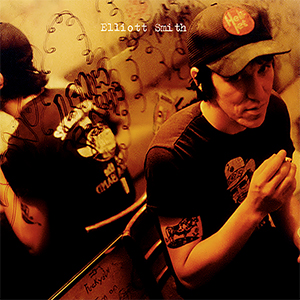
‘Either/Or’ by Elliott Smith

The solo career of Elliot Smith can be divided into two fairly clear sections. Part one consisted of three albums, of which this is the third. Part two began with his ‘best song’ oscar nomination and finished with his tragic early death. As his career picked up more attention, his albums production became more ambitious. At the time of ‘Either/Or’, however, an Elliot Smith album was still a very low key affair. Smith would play all the instruments on the album himself, giving the record a very home-made feel. This would be pretty effective. Smith was a much better guitarist than he was, say, a drummer, but his skills in other instruments were certainly adequate to the task.

‘Either/Or’, then, is a lovely album of music. Every one of its twelve tracks is a delicately assembled piece of songwriting, and there’s just enough range between its gentler songs and its more upbeat ones to give the album the breadth it needs. Smith’s voice is an extra-ordinary thing. On its own, it’s slightly thin and fragile on its own, but when he layers it up to sing in unison or harmony with himself, it makes for a Beatles-esque collage of richness, worth the purchase price on its own.

It’s this kind of record that makes this project worthwhile. I got it as a Christmas present a few years ago having come to Elliot Smith through his later work, and although I’d listened to it, I’d not paid it much attention. This time round, I’ve been listening to it solidly for almost a week, and loving it. I will definitely come back to it.

‘Earthling’ by David Bowie

Throughout the nineties, Bowie released five solo albums, a slower work rate than his seventies peak, put an impressive tally for an artist so far into his career. ‘Earthling’ was the fourth album of the decade. It sits slightly awkwardly between the more ambitious and experimental ‘Outside’ and the back to basics approach of ‘Hours’. As a result, it tends to be somewhat dismissed, though on its release it had a reasonably warm reception.

‘Earthling’ is often referred to as Bowie’s drum and bass album, and this is fair to a degree. Certainly the album has one foot firmly planted in the world of dance. There is an awful lot of fast, programmed percussion throughout Earthling, and the album received a certain amount of criticism for jumping the bandwagon. This criticism is, I think, unfair on two counts. For a start, drum and bass was never really a dominant genre outside the world of the music press – Bowie’s flirtation with it was never going to be an over-populist gimmick, so he deserves credit for it on that basis. Secondly, despite the rhythmic dominance of the record, the quality of song writing is never sacrificed. In fact, there are some excellent songs on ‘Earthling’, comparable to the number on ‘Outside’, but without so much of the filler. ‘Little Wonder’, ‘Battle For Britain’, ‘Dead Man Walking’ and ‘Seven Years In Tibet’ could have all been stripped of their programming, and still worked. ‘Earthling’ also contains a number of musical flourishes from Bowie’s own history, demonstrating an increasing awareness and willingness to plunder his own roots – ‘Dead Man Walking’ is built around the same riff as ‘The Supermen’, Mike Garson’s piano outro to ‘Battle For Britain’ could have come from ‘Aladdin Sane’, and Bowie’s cockney vocals on ‘Little Wonder’ could have been recorded at the end of the sixties. Amongst these familiar touches are lots of new things – ‘Satellites’ and ‘Telling Lies’ are both pretty different from anything he’d previously recorded, and ‘Law’ is virtually unrecognisable as Bowie (and perhaps, therefore, not the best choice for a closing track).

All in all, it’s a fine album in its own right, and more than a decade on, it looks increasingly likely that it’ll remain as Bowie’s final new direction. The three albums he’s released so far have been good, or great – better than this, maybe – but all of them have been comparatively safe. It’s very unlikely he’ll do something like this again.

Wednesday, 10 February 2010

‘Dog On Wheels’ by Belle & Sebastian

Only a few days ago, I listened again to ‘Dear Catastrophe Waitress’, the most polished, and perhaps the most successful of Belle and Sebastian records. From there, I go to here, Belle and Sebastian’s first EP. In reality, this barely counts as a real record. Released after the first two albums had made a bit of stir, this EP contains four demo tracks recorded before Belle and Sebastian were even a band. It is, shall we say, considerably less polished than their later work.

It’s better than you might expect, though. ‘Dog On Wheels’, the first track, has some convincing energy, and a nice trumpet line. ‘The State I Am In’, familiar through it’s ‘Tigermilk’ version is also pretty well formed here. The slower pace gives Stuart Murdoch’s lyrics space to breathe – it’s pretty clear that at this early stage, they are the bands main selling point. ‘String Bean Jean’ ups the tempo and adds some wild-west style guitar work and a harmony which, although slightly ropey, shows the promise of things to come. The final track, ‘Belle And Sebastian’ has some lovely arrangements, but the budgetary restraints are hard to escape. It also suffers from a vocal performance that only a mother could love. In later years, Murdoch would become a fine delicate vocalist – at this point, it would charitable to say he was still finding his feet.

I heard nothing of this when it was released, but I remember it being around. I was an avid reader of the music pages on teletext, and I remember this record being named their single of the year. In a sense, this is an inexplicable choice, but there is something about it that appeals, even if it’s just the knowledge of what was to come.

Thursday, 28 January 2010

‘d:tour 1997 live’ by Delirious?

By a quirk of alphabetical organisation, we come to this immediately after the four Cutting Edge albums, but miss out ‘King of Fools’, the anchoring album that ties this record to them. Ah well.

Once the Cutting Edge band had changed their name to Delirious and decided to go full time, lots of things happened. All of a sudden, there was a full album, singles, a tour of proper venues, even TV appearances. The first phase of their new lives was concluded with this, a recording from a date on the tour, released, if memory serves, through mail order? I may be making that up.

As it stands, it’s certainly a good document of how things were at the time. Most of ‘King of Fools’ is represented here, as well as a handful of later Cutting Edge tracks. At the time, the tracklisting was a mild disappointment –the ‘King of Fools’ tracks were pretty much as recorded, and the rest had been recently released on the ‘Live and in the Can’ collection, but separated from this context, everything sounds pretty good. The between-song banter from Martin Smith is mildly awkward at points, but full of optimism for the future which proved to be fairly well founded – Delirious would certainly go from strength to strength over the years, though not always in the way they had planned or expected.

Thirteen years later, it’s hard to regard this album as essential. It isn’t – but it does remain a decent listen, and it retains a nostalgic glow for anyone caught up in their trajectory at the time.

Friday, 11 December 2009

‘Brand New Day’ by Beehive

‘Brand New Day’ is one of the albums in my collection that came slightly out of nowhere. I saw Beehive live at Spring Harvest many years back, but I’m sure I had this album before that. I’ve no idea why – I may have seen them at Soul Survivor beforehand.

At the time, I remember thinking Beehive were one of those Christian bands that had real potential for crossing into the mainstream. Jamiroquai and The Brand New Heavies were both having success with a similar sound, and I saw no reason why Beehive couldn’t compete. Others must have thought so too – turns out they won a Mobo award for ‘Brand New Day’. Sadly, it wasn’t to be. There was no follow-up album, though I’ve no idea why this was.

Twelve years on, the album stands up pretty well. It’s slightly dated, very much a product of its time, but a lot of the tracks still sound pretty strong. Opener, ‘Fool’s Wisdom’, ‘No-One Knows’ and ‘Hype’ still sound appropriately funky. Sadly, all three of these tracks are at the beginning of the album, which skews the record somewhat. There’s god stuff later – ‘Presence of Your Love’ is a nice tune, and ‘Turn It Around’ is a gem which has stood the test of time nicely, but there’s some filler there as well. ‘Get Busy’ sounds a bit forced, and ‘Answer To Your Prayer’, while an admirable attempt to finish on a different note, just doesn’t match up to the rest of the album.

Still, it remains a promising debut, and I’m sure they’d have gone on to make a good second album if they’d stuck with it. A shame we’ll never know.

Wednesday, 9 December 2009

‘Blur’ by Blur

Following the release, and lukewarm critical reception of ‘The Great Escape’, Blur went to great efforts to evolve, releasing this album in 1997. Listening to the album as a whole, it’s an obvious new direction for the band, but it would be a mistake to say they’d neglected their pop roots. ‘Beetlebum’ and ‘Song 2’ may have a slightly rougher arrangement than previous albums, but given a polish, they’d have both sat comfortably on earlier albums. Only with ‘Country Sad Ballad Man’ is there a real indication that Blur were entering new territory. It’s a down beat arrangement of a track, layered in slide guitar, and featuring a vocal performance from Damon Albarn that jumps through octaves like hoops. It sounds unlike anything Blur had done up to that point. The album continues in a similar vein – ‘You’re So Great’ is rougher than any tracks that had come before it, though lovely never-the-less, ‘On Your Own’ is the most awkward sounding track they’d ever released as a single, ‘Theme From Retro’ dispenses with words altogether, and pretty much loses its tune along the way, ‘Chinese Bombs’ is abrasively loud and short, and ‘Essex Dogs’ is more of a rambling stream of consciousness than a song.

Mixed into all this, however, are some great pop moments. ‘M.O.R.’ may have been derivative enough to require a writing credit for Bowie and Eno, but it’s still a great track, ‘I’m Just A Killer For Your Love’ and ‘Strange News From Another Star’ are both great, and ‘Look Inside America’, though weary, is suitably anthemic.

All in all, ‘Blur’ is a fantastic album, and testament to the fact that the band made all the right decisions before making it. It also cements their reputation for being great musicians – it’s more evidence in particular that Coxon is one of the greatest guitarists of his generation. Twelve years on, this album sounds as good as it ever did.

Sunday, 8 November 2009

'Amazed' by Brown Bear Music

The first real mystery in this listening experience. I can't remember buying this, or where it came from. I don't know anything about the band, or the context the album was released in. The internet is not helping me here, suggesting it made little impact at the time. As a result of this, I listened to this with no pre-conceptions. I vaguely remembered the chorus of the title track, but that was it.

It's also the first worship album I've come across. They're always hard to be objective about, and difficult to appraise fairly. This album, though, is pretty good.

Musically, it is, at its core, a reasonably straight-forward indie-rock affair, but it's very well produced, with all sorts of loops and samples that enhance the songs without overpowering them. Lyrically, it's... fine. Not amazing, but solid enough. The trouble is, it's very obviouly worship music, but it's not especially congregational, putting the album solidly into a musical niche that always struggles to work. It's a shame - on this evidence, Brown Bear Music should have been able to carve out an identity as a slighlty more subtle Delirious - but it was always going to be the case. I'd listen again, though.

Thursday, 15 October 2009

‘A Short Album About Love’ by The Divine Comedy

Here’s an album I’ve not properly listened to for a long time. It’s only half an album, really, recorded with a budget-busting orchestra between Casanova and Fin de Siecle, so if I’ve wanted to listen to a Divine Comedy album throughout the years, this has tended to be very low down the list. That said, Divine Comedy fandom often rates this as a career high for Hannon, so it’s worthy of re-appraisal.

It starts magnificently, no question. ‘In Pursuit Of Happiness’ starts small but becomes huge as the Brunei Ensemble pour layer after layer of orchestration over what’s actually a pretty simple tune. Every time a new set of instruments plays, Hannon’s voice swells in grandeur and volume before eventually, the whole song crashes back down to a guitar-only ending. This leads into the far more conventional ‘Everybody Knows’, the albums only single. It’s a nice enough track, but it doesn’t make full use of the orchestration available. ‘Someone’ and ‘If…’ follow. They’re the dense core of the album, full of strings and horns, but a little lacking in joy. I know a lot of people rate ‘If…’ as their favourite Divine Comedy song, but I’ve personally never really taken to it. ‘If I Were You (I’d Be Through With Me)’ has a lighter touch which serves it well. ‘Timewatch’ is essentially a bigger replica of the version released on ‘Liberation’. The key has changed, it’s slowed down slightly, and the sting section is larger, but there are no radical differences. ‘I’m All You Need’ closes the album with the most upbeat track since the first two. It’s actually very simple in terms of structure and lyrics, but it’s soul-lifting stuff, especially the instrumental section. The part where the horns join the strings is one of the great moments in the Divine Comedy back catalogue.

It’s tempting to wonder what would have happened if a full album had been done like this. I imagine it could have filled out nicely, diluting the sombre air which the middle of the album has. The b-sides that were released alongside this album would indicate so – we’ll come to those another time. That said, it could have collapsed under its own weight. Certainly the next album, ‘Fin de Siecle’ threatened to do both of these things at the same time. This still isn’t my favourite Divine Comedy record by a long shot, but it’s worth listening to, and it has some great moments, and you can’t say that about every album.

Monday, 5 October 2009

'3, 6, 9 Seconds Of Light' by Belle and Sebastian


Not an album, but EP's are listed on the mp3 player as albums, so why not. Released in the very early days of Belle & Sebastian, this shows promise. It's lyrics are strong, and the music is ambitious, but perhaps a little too much. The first two tracks seem muddled, as if too many instruments are playing at once with little idea of how to complement each other. The final two are clearer, and better for it, though Stuart Murdoch's voice is still rather fragile, and the comparative lack of arrangement leaves it more exposed than it should be. They would get better.